




Table of Contents
- Key Highlights:
- Introduction
- Woo Marketing Behind the Curtain
- Woo’s Objectives
- Demand Generation Roadmap
- Strategies for Growth: Market Share and Customer Engagement
- The Role of Data in Marketing Strategy
- Content Marketing as a Growth Lever
- Future Trends in WooCommerce Marketing
- FAQ
Key Highlights:
- WooCommerce is evolving its marketing strategy to enhance brand awareness and monetization.
- The company emphasizes a customer-centric approach, focusing on long-term relationships and community engagement.
- A comprehensive demand generation roadmap has been established to position WooCommerce as a leading choice in the eCommerce platform market.
Introduction
In the rapidly changing world of eCommerce, businesses must adapt their marketing strategies to stay relevant and competitive. WooCommerce, a leading eCommerce platform, recently hosted a community event to discuss its innovative approach to marketing and brand growth. With insights from key executives, including Mahrie Boyle, VP of Integrated Marketing, and Tamara Niesen, CMO of Woo, the conversation highlighted the company’s strategic objectives and the importance of a robust demand generation framework. This article delves into the insights shared during this event, providing a comprehensive analysis of WooCommerce's marketing evolution and future direction.
Woo Marketing Behind the Curtain
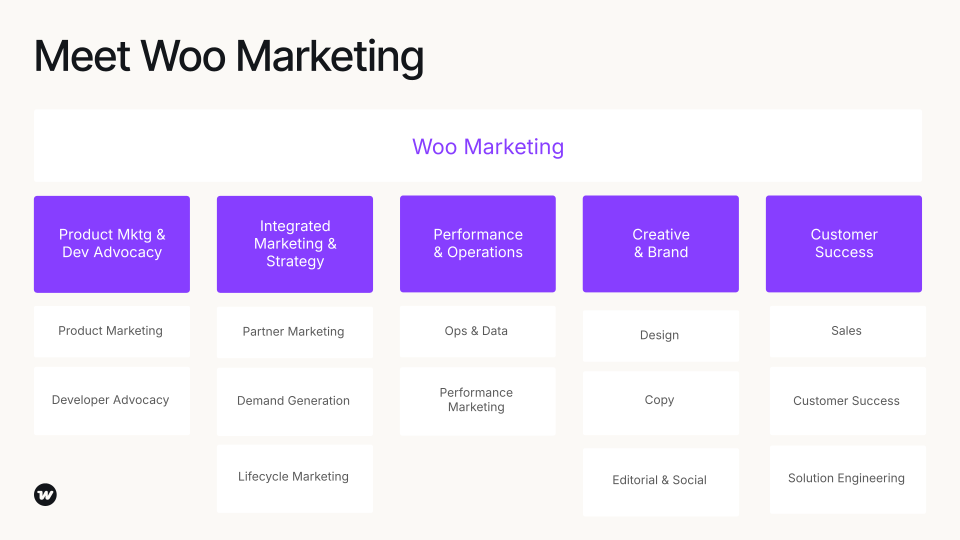
Understanding the inner workings of WooCommerce's marketing strategy reveals a sophisticated and multi-faceted approach. The marketing engine consists of several key teams: product and integrated marketing, creative and brand, and customer success. This collaboration is designed to create a seamless experience for customers — from the initial touchpoint to post-purchase engagement.
The overarching vision of WooCommerce is clear: to provide a platform that evolves alongside its users' ambitions. This principle guides their marketing efforts, ensuring they remain aligned with customer needs and market trends. The emphasis on a community-centric model reinforces the idea that WooCommerce is not just a service provider but a partner in the growth of its clients' businesses.
Woo’s Objectives
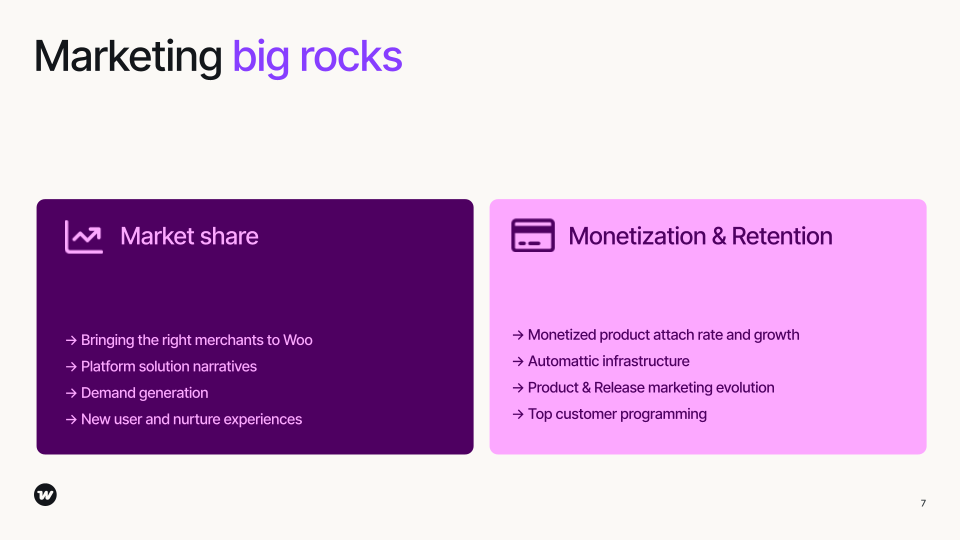
WooCommerce operates under two primary pillars aimed at enhancing its market presence:
- Drive Platform Growth and Brand Awareness: The objective is to expand the WooCommerce user base by effectively communicating the platform's unique benefits and capabilities. This includes targeting the right merchants and enhancing the user experience through tailored marketing initiatives.
- Increase Monetization and Retention: By focusing on services, subscriptions, and partnerships, WooCommerce aims to create a sustainable ecosystem that fosters growth. The goal is to enhance monetization opportunities, which in turn allows for reinvestment into product development and marketing strategies.
This dual approach not only supports WooCommerce's growth but also provides their partners, including agency collaborators and marketplace vendors, with avenues for success.
Demand Generation Roadmap
Effective customer acquisition in the eCommerce space is a nuanced process. As outlined during the event, it involves more than just presenting an advertisement to potential clients. Building awareness and shaping perceptions are essential steps in the buyer's journey. For many businesses, switching platforms is a significant decision influenced by various stakeholders, including CEOs, technical buyers, and marketing teams.
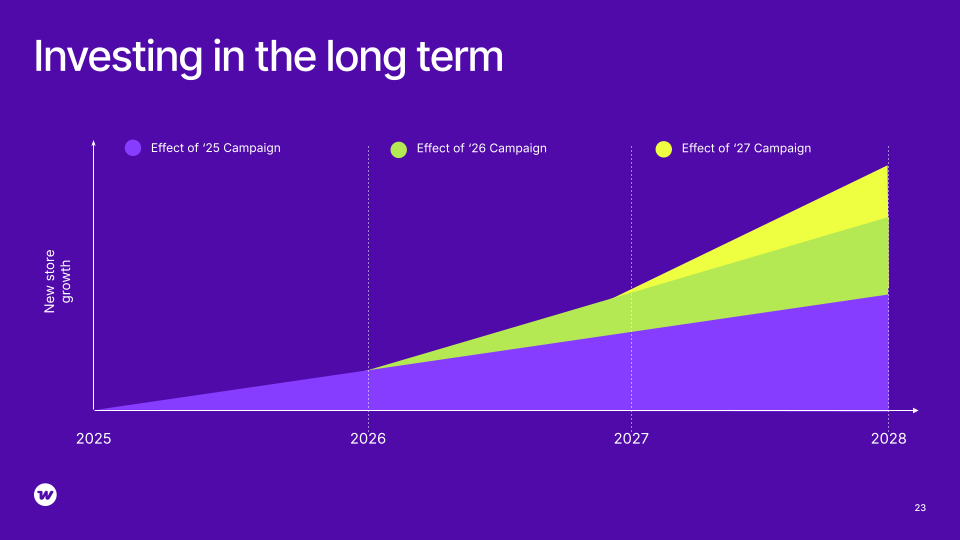
The typical buyer cycle for commerce platforms can extend from three to six years or more. This lengthy process requires WooCommerce to remain a prominent option within the consideration set of potential customers. To ensure they are top-of-mind, WooCommerce has embarked on a robust demand generation strategy that includes rebranding efforts aimed at establishing trust and credibility in the market.
The recent relaunch of the Woo brand marked the beginning of this comprehensive demand engine, which is designed to connect with the target audience and foster long-term loyalty.
Strategies for Growth: Market Share and Customer Engagement
To effectively drive market share, WooCommerce employs strategies that resonate with potential users while addressing the needs of existing customers. This includes showcasing unique product offerings and crafting compelling narratives around the platform's capabilities.
Targeting the Right Merchants
Identifying and attracting the right merchants is crucial for WooCommerce's growth strategy. By analyzing trends and user behavior, WooCommerce can tailor its marketing outreach to specific demographics that align with their offerings. This targeted approach ensures that marketing efforts are not only efficient but also yield higher conversion rates.
Enhancing User Experience
A key component of WooCommerce's marketing strategy is enhancing the overall user experience. This is achieved through continuous improvements to the platform, including user-friendly interfaces, seamless integrations, and robust customer support. By prioritizing user experience, WooCommerce aims to foster a loyal customer base and encourage word-of-mouth referrals.
Building Community and Partnerships
At the heart of WooCommerce’s marketing philosophy is the belief in community. Engaging with users, developers, and partners fosters a sense of belonging and encourages collaboration. WooCommerce actively supports its community through educational resources, events, and partnerships that empower users to maximize their success with the platform.
The Role of Data in Marketing Strategy
Data analytics plays a pivotal role in shaping WooCommerce's marketing strategies. By leveraging data insights, WooCommerce can make informed decisions regarding targeting, messaging, and campaign optimization. This data-driven approach allows for continuous refinement of marketing tactics, ensuring they remain effective in an ever-evolving marketplace.
Understanding Customer Behavior
Analyzing customer interactions across various touchpoints provides valuable insights into buying habits and preferences. This understanding enables WooCommerce to tailor its offerings and marketing messages to meet the expectations of its audience.
Performance Measurement
Measuring the effectiveness of marketing campaigns is essential for ongoing success. WooCommerce employs various metrics to assess the performance of their strategies, allowing for timely adjustments that enhance overall results. By focusing on key performance indicators (KPIs), WooCommerce can ensure that their marketing efforts are aligned with their business objectives.
Content Marketing as a Growth Lever
Content marketing is another vital aspect of WooCommerce's strategy. By creating valuable, relevant content, WooCommerce positions itself as an authority in the eCommerce space. This not only attracts potential customers but also builds trust and credibility among existing users.
Educational Resources
Offering educational resources, such as webinars, tutorials, and blogs, empowers users to make informed decisions about their eCommerce strategies. By providing valuable insights, WooCommerce enhances its reputation as a thought leader and builds stronger relationships with its community.
Engaging Storytelling
Crafting compelling narratives around the success stories of WooCommerce users serves as powerful marketing collateral. These stories not only highlight the capabilities of the platform but also inspire others to envision their potential success with WooCommerce.
Future Trends in WooCommerce Marketing
As the eCommerce landscape continues to evolve, WooCommerce remains committed to adapting its marketing strategies to meet emerging trends and consumer expectations.
Embracing Personalization
Personalization is becoming increasingly important in marketing. WooCommerce plans to leverage data analytics to deliver personalized experiences that resonate with individual users. By tailoring marketing messages and product recommendations, WooCommerce can enhance engagement and drive conversions.
Expanding Global Reach
With the growth of online shopping worldwide, WooCommerce aims to expand its global footprint. This includes localization efforts to cater to diverse markets and cultural nuances. Adapting marketing strategies to fit various regions will be essential for WooCommerce's continued success.
Fostering Sustainable Practices
Sustainability is gaining traction among consumers, and WooCommerce recognizes the need to align its marketing efforts with environmentally friendly practices. By promoting sustainable products and practices, WooCommerce can appeal to a growing demographic of eco-conscious consumers.
FAQ
What are the main objectives of WooCommerce’s marketing strategy? WooCommerce's marketing strategy focuses on driving platform growth and brand awareness, as well as increasing monetization and retention through services, subscriptions, and partnerships.
How does WooCommerce define its target market? WooCommerce targets a diverse group of merchants, including small business owners and established brands, by analyzing market trends and user behavior to tailor its marketing efforts accordingly.
What role does community engagement play in WooCommerce's marketing? Community engagement is central to WooCommerce's marketing philosophy. By fostering relationships with users, partners, and developers, WooCommerce creates a sense of belonging that enhances brand loyalty and encourages collaboration.
How does WooCommerce measure the success of its marketing campaigns? WooCommerce employs key performance indicators (KPIs) to assess the effectiveness of its marketing strategies, utilizing data analytics to make informed decisions and optimize campaigns in real-time.
What future trends is WooCommerce preparing for in its marketing efforts? WooCommerce is focusing on personalization, expanding its global reach, and fostering sustainable practices as key trends to enhance its marketing effectiveness and align with consumer expectations.